Maintaining asphalt and bitumen surfaces is essential for preserving safety, performance, and long-term durability. Over time, roads, driveways, and hardstands naturally experience wear due to traffic, weather exposure, and ground movement. When issues begin to appear, property owners are often faced with an important decision: is grading enough, or is full resurfacing required?
Understanding the difference between these two approaches is essential for making the right long-term investment. For property owners and businesses in Redland Bay, QLD, knowing when to use grading versus resurfacing can help extend the life of their surface and prevent unnecessary ongoing issues.
What Does Grading Fix?
Grading is the process of reshaping and re-levelling the existing surface or base to restore proper drainage and surface alignment. It is typically used when the underlying structure is still in reasonable condition but the surface has developed minor issues.
Grading can help address:
- Minor surface unevenness
- Water pooling or drainage issues
- Small low spots or depressions
- Early signs of surface wear
When the foundation remains stable, grading can be an effective way to correct surface performance without the need for more extensive work.
When Grading Alone Is Enough
Grading is generally sufficient when the issues are primarily related to surface shape rather than structural failure. If the asphalt or bitumen layer is still intact and the base has not significantly deteriorated, regrading can restore proper function.
Grading alone may be suitable when:
- The surface is mostly intact with no major cracking
- Water is pooling due to poor slope rather than structural damage
- There are minor dips or uneven areas only
- The pavement is still relatively new or well-maintained
In these cases, correcting the levels and drainage can significantly improve performance and extend the life of the existing surface.
What Resurfacing Involves
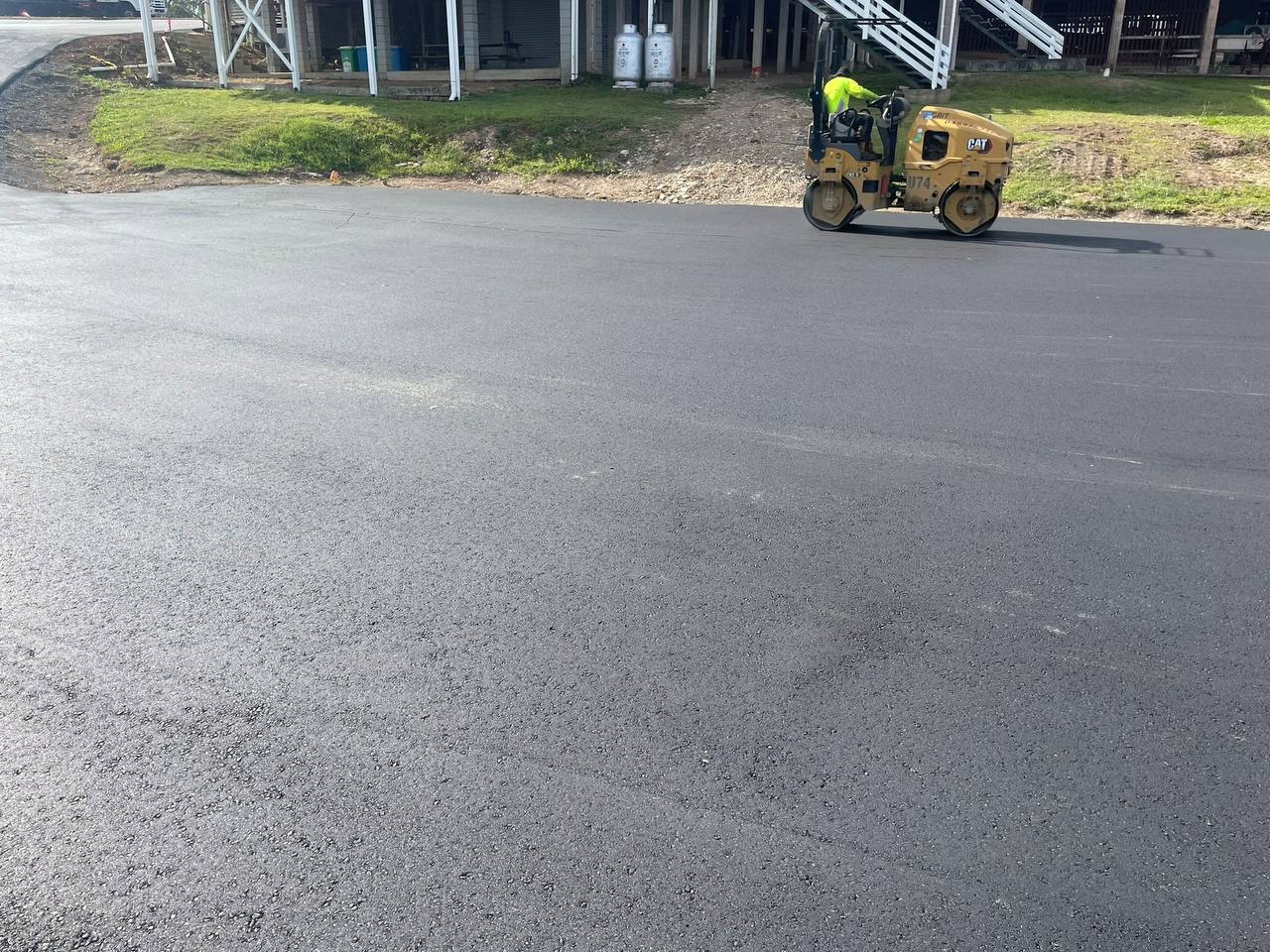
Resurfacing is a more extensive process that involves applying a new layer of asphalt or bitumen over the existing surface. It is used when the top layer has deteriorated beyond simple correction or when the surface is showing widespread wear.
Resurfacing helps restore:
- Surface strength and durability
- Smoothness and ride quality
- Appearance and usability
- Protection against water infiltration
It is a more comprehensive solution that addresses both surface condition and long-term performance.
When Resurfacing Is Required
While grading can solve many surface issues, there are situations where resurfacing becomes necessary. These typically involve more advanced deterioration or structural concerns.
Resurfacing is usually required when:
- There are widespread cracks across the surface
- Potholes are forming or recurring
- The surface is breaking down or raveling
- Water has penetrated and weakened the pavement
- Previous repairs are no longer effective
- The surface has reached the end of its service life
In these cases, grading alone will not resolve the underlying issues, as the surface layer itself has deteriorated.
The Importance of Assessing the Base Condition
One of the most important factors in deciding between grading and resurfacing is the condition of the base beneath the surface. Even if the top layer appears damaged, the underlying structure may still be sound—or it may already be compromised.
A stable base may allow for grading and surface correction, while a weakened base often requires resurfacing to restore full performance.
Proper assessment helps ensure the right solution is chosen for long-term durability.
Avoiding Short-Term Fixes for Long-Term Problems
Choosing grading when resurfacing is required can lead to ongoing issues. While grading may temporarily improve surface levels, it will not resolve deeper structural problems.
Similarly, resurfacing without addressing drainage or base issues may result in premature deterioration of the new surface.
A balanced and informed approach ensures that both surface and structural needs are properly addressed.
Why Professional Assessment Matters
Determining whether grading alone is enough or resurfacing is required is not always straightforward. It requires an understanding of pavement condition, drainage performance, base stability, and long-term usage requirements.
Experienced contractors can assess the full condition of the surface and recommend the most appropriate solution based on real site conditions rather than visible symptoms alone.
For property owners in Redland Bay, this ensures that the chosen approach delivers lasting value and performance.
Conclusion
Grading alone is often sufficient when surface issues are minor and the underlying structure remains stable. However, when there is widespread cracking, pothole formation, or structural deterioration, resurfacing becomes the more effective long-term solution.
For property owners and businesses in Redland Bay, QLD, understanding the difference between these approaches is essential for maintaining safe, functional, and durable asphalt and bitumen surfaces.
Redland Bay Surfacing Solutions provides professional assessment, grading, resurfacing, and repair services tailored to local conditions. Whether your surface requires minor correction or full resurfacing, our experienced team can recommend and deliver the most effective solution for long-term performance.
Call us on: 07 3113 9392
Click here to find out more about Redland Bay Surfacing Solutions
Click here to complete our contact form and see how we can help with your driveway needs.